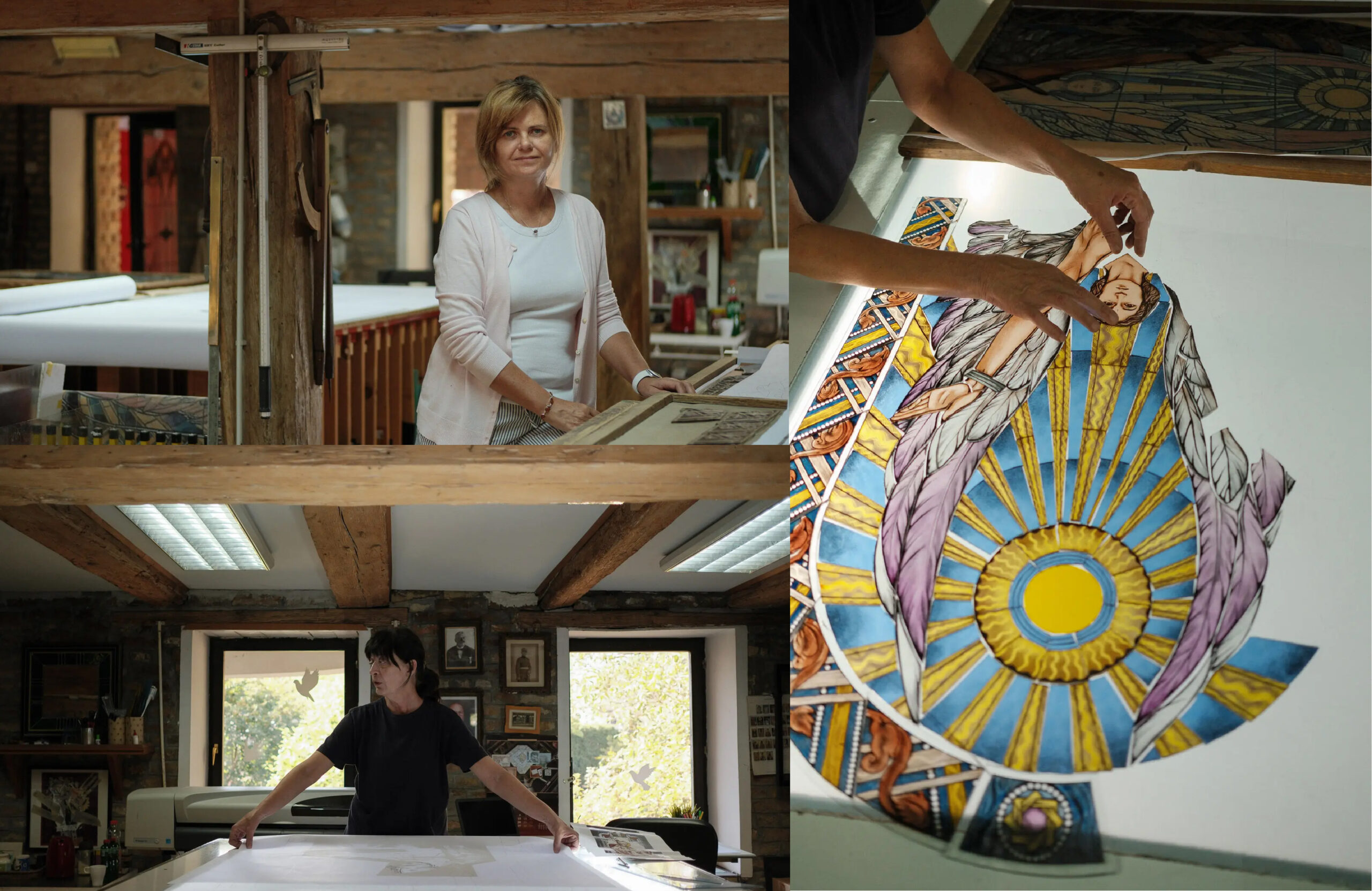

Stained glass studio
Professional craftspeople
Atelje Stanišić stands out as an effective example of active craftspeople, largely due to its deep commitment to preserving traditional craftsmanship while actively engaging in apprenticeship models. Over the years, the atelier has passed down its knowledge and skills through generations, ensuring that younger artisans are trained in the techniques of stained glass making, restoration, and design. This apprenticeship model is central to their success, as it allows them to maintain high standards of craftsmanship while adapting to the evolving demands of modern design and heritage conservation. Their route to their success has been shaped by a combination of historical and contemporary factors. Legislation and cultural policies related to heritage preservation have created an environment where cultural heritage is recognized as a valuable asset and have supported funding opportunities for restoration and conservation projects. In addition, the atelier’s decision to diversify its practice by combining historical restoration with modern stained glass design proved to be a crucial strategy. This approach allowed them to stay relevant in a rapidly changing market while maintaining their core expertise. Collaborations with churches, museums, and public institutions, alongside a strong presence in the local community, further facilitated their success, allowing them to grow their reputation and secure a steady flow of projects. Through these combined efforts—adherence to cultural preservation laws, a focus on craftsmanship, apprenticeship models, and strategic partnerships—Atelje Stanišić has established itself as a leading force in the stained glass industry.